


Before a claim is read or a benefit understood, the packaging has already signalled a level of quality.
Soft-touch flexible packaging influences that moment. Whether used in stand-up pouches or promotional sachets, it shapes how the product is experienced at first touch.
Soft Touch as a Positioning Lever
Brand positioning is not expressed through graphics alone. It is built through systems: visual identity, structural design, material selection, and surface finish..
Surface finishes impact how light interacts with the packaging and how it feels in hand. Gloss enhances reflectivity and visual intensity. Soft-touch flexible packaging diffuses light and alters the surface feel.
The question is not which finish is better.
The question is which finish best supports the intended positioning.
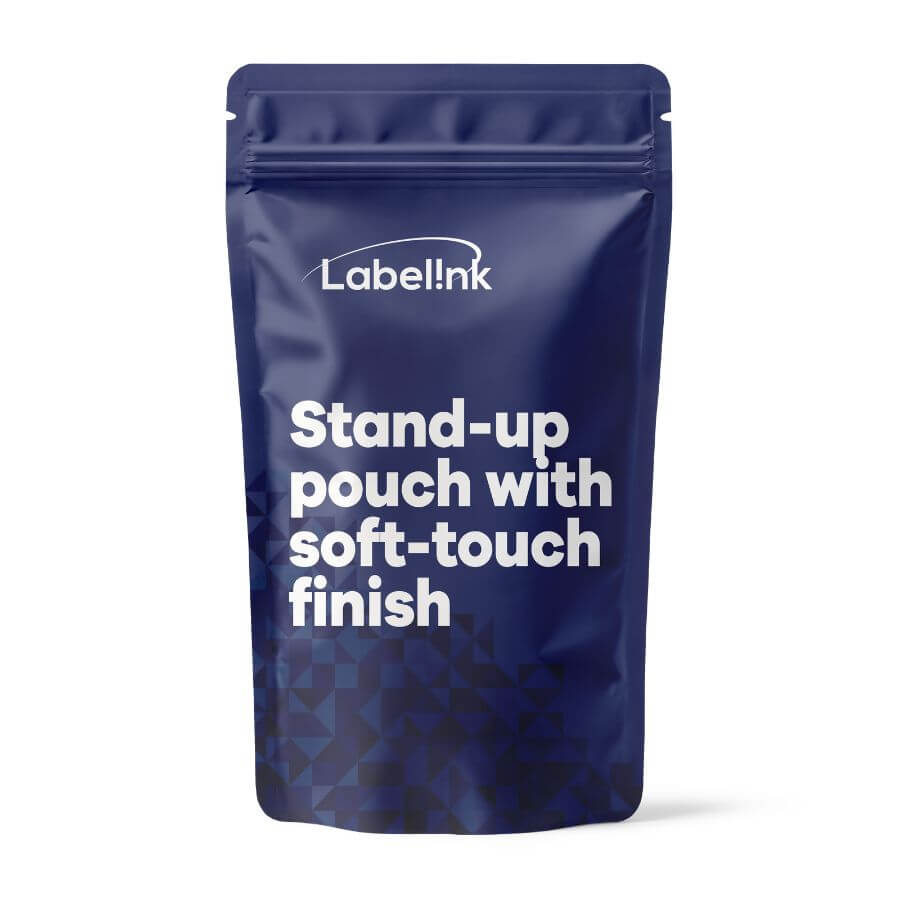
Elevating Brand Coherence Across Formats with Soft-Touch Flexible Packaging
Marketing leaders are accountable for shaping perception and ensuring that the brand remains consistent across formats and touchpoints.
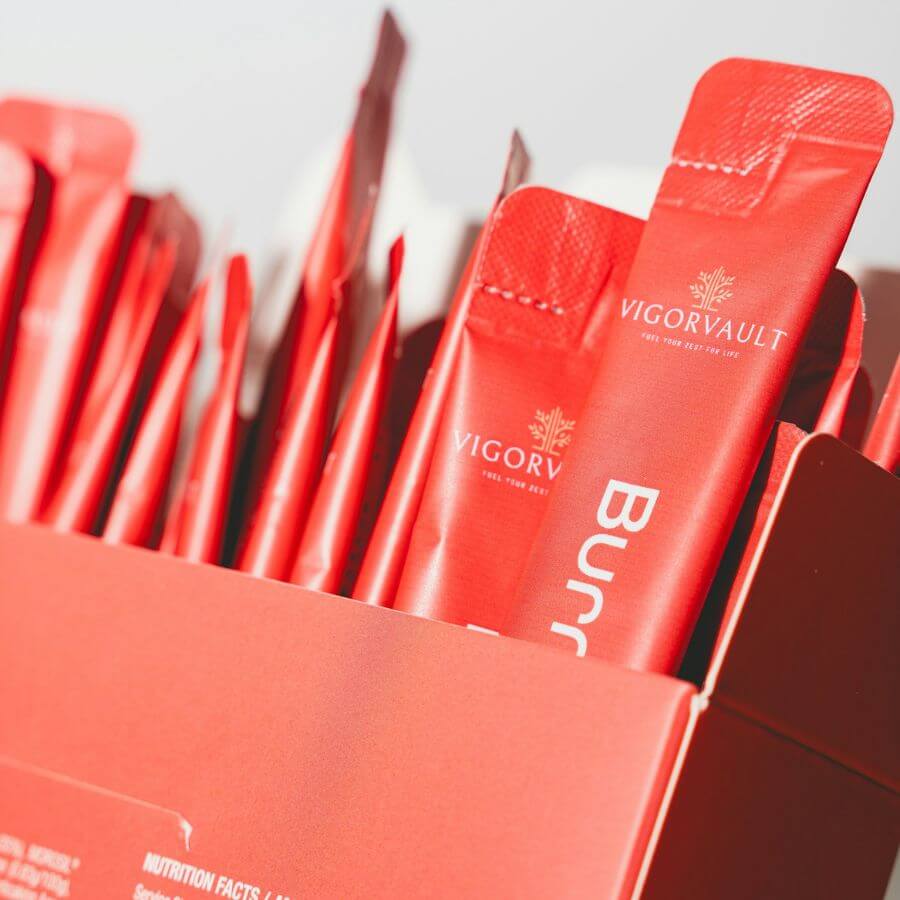
When soft-touch is integrated early into flexible packaging development, it strengthens coherence across SKUs and format families. That same logic should extend to secondary packaging, ensuring that flexible formats and folding cartons reflect a consistent visual identity and tactile experience.
In flexible packaging, differentiation does not always require a louder design.
Sometimes, it requires greater material discipline.
Engineering Soft-Touch Flexible Packaging Without Compromising Performance
Strategic intent must be supported by technical execution.
At Labelink, soft-touch flexible packaging decisions are defined during pre-production discussions. Brand intent, retail context, sealing requirements, structural constraints, and performance expectations are reviewed together before validation begins.
Sachets and pouches operate under strict non-negotiables: barrier performance, seal reliability, and product safety remain primary. Any soft-touch flexible packaging application must preserve these fundamentals.
Coatings interact directly with sealing layers and barrier constructions. Compatibility is not assumed. It must be validated.
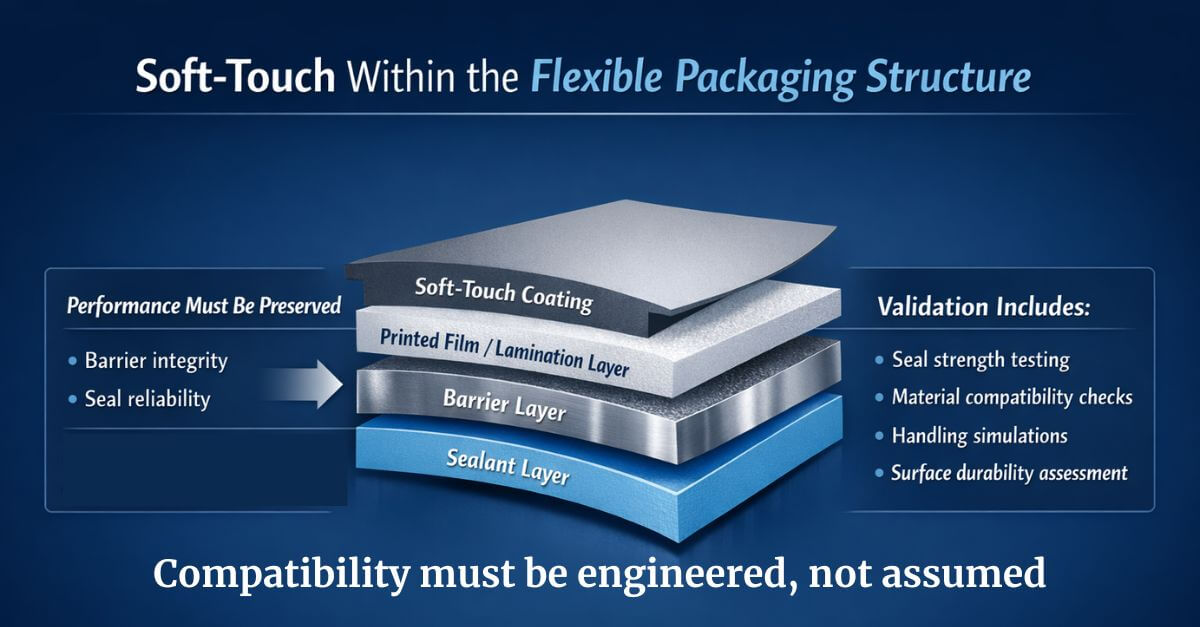
Validation of soft-touch flexible packaging should include:
- Seal strength testing
- Compatibility checks across material constructions
- Handling simulations
- Surface durability assessments
The sensory experience must remain intact from the production line to the end user.
Explore how soft touch can strengthen your brand positioning across flexible formats.
Frequently Asked Questions
1. What is soft-touch flexible packaging?
Soft-touch refers to a specialized coating or lamination applied to flexible formats such as pouches and sachets. It creates a smooth, matte surface that modifies both light behavior and tactile feel. When integrated intentionally, it supports brand positioning without altering structural performance.
2. How does a soft-touch finish influence perceived quality?
Soft-touch diffuses light and alters surface feel at first contact. These physical characteristics shape how quality is interpreted before any claim is read. The effect is immediate and subtle, reinforcing brand intent through controlled visual and tactile cues.
3. Does soft-touch flexible packaging affect seal integrity or barrier performance?
Soft-touch should not compromise seal integrity or barrier performance when properly engineered. Coatings interact with sealing and barrier layers, so compatibility must be validated through seal strength testing, structural compatibility checks, and durability assessments.
4. Should soft-touch be applied across all SKUs and packaging tiers?
Not necessarily. The decision to use soft-touch should align with brand positioning and portfolio strategy. For stronger coherence, brands may extend the same surface logic across SKUs, flexible formats, and even secondary packaging such as folding cartons.
5. When should soft-touch be integrated into packaging development?
A soft-touch coating should be considered early in the development process. Early integration allows alignment between brand intent, structural design, sealing requirements, and performance constraints, reducing the risk of inconsistencies across formats.
6. What technical validation is required for soft-touch flexible packaging?
Validation typically includes:
- Seal strength testing
- Compatibility checks across material constructions
- Handling and distribution simulations
- Surface durability assessments
Soft-touch flexible packaging adds value only when it performs reliably from production to end user.