


Laundry management can be a major operational challenge for hotels, resorts, hospitals, commercial laundries, military facilities, and industrial uniform programs. When thousands of towels, sheets, gowns, robes, uniforms, mats, and garments move in and out of laundry cycles every week, it becomes difficult to know exactly what is available, what is missing, and what needs to be replaced.
RFID laundry tags help solve this challenge by giving each textile or garment a unique digital identity. With RFID technology, organizations can track laundry items more accurately, reduce manual counting, improve inventory control, and make laundry operations more efficient.
For industries that rely on clean, available textiles every day, RFID laundry tags are transforming the way laundry is managed.
What Are RFID Laundry Tags?
RFID laundry tags are small, durable tracking tags designed to be attached to textiles, linens, garments, towels, uniforms, gowns, and other reusable fabric items.
Each tag contains an RFID chip and antenna that can be read by an RFID scanner. This allows laundry teams to identify and track items quickly without scanning each piece one by one like a barcode.
Unlike standard labels, laundry RFID tags are designed for demanding environments. Depending on the application, they may need to withstand repeated washing, drying, water exposure, detergents, high temperatures, pressure, and chemical cleaning processes.
RFID laundry tags can be used for:
- Hotel linens
- Resort towels and robes
- Hospital gowns and patient linens
- Scrubs and healthcare garments
- Military uniforms Industrial uniforms
- Food processing uniforms
- Manufacturing workwear
- Commercial laundry assets
- Mops, mats, and reusable cleaning textiles
The goal is simple: make every textile easier to identify, track,
count, and manage.
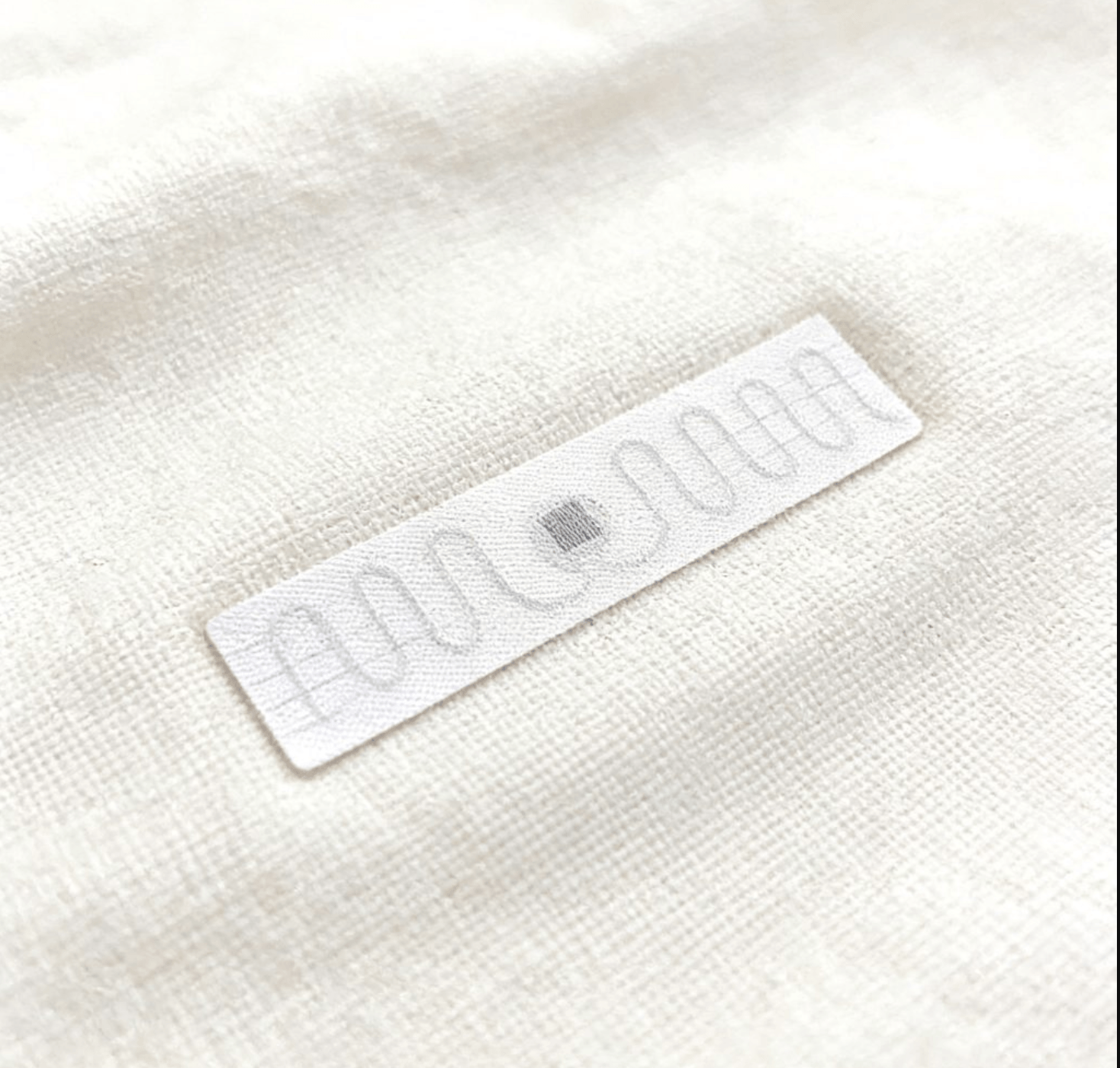
How RFID Laundry Tags Work
RFID stands for radio frequency identification. In laundry applications, an RFID tag is attached to a textile item and encoded with a unique identifier. When the item passes near an RFID reader, the reader captures the tag’s information and connects it to a laundry management or inventory system.
This helps organizations know when an item was issued, collected, washed, returned, reassigned, or removed from service.
Instead of relying on manual counts or paper-based tracking, RFID laundry tags help automate textile visibility across the full laundry cycle.
A typical RFID laundry process may include:
- Issuing the textile or garment
- Collecting used laundry
- Scanning bulk laundry before washing
- Tracking items through processing
- Confirming clean inventory
- Returning items to the correct location, department, or employee
- Monitoring item age and wash cycles
This gives laundry teams more accurate data and better control
over high-volume textile movement.
Benefits of RFID Laundry Tags
RFID laundry tags offer several benefits for organizations that manage large volumes of reusable textiles.
Improved Inventory Control
Manual laundry counts are time-consuming and prone to error. RFID makes inventory tracking faster and more accurate by allowing teams to scan multiple items quickly.
This helps businesses understand:
How many items are in circulation How many items are being washed How many are in storage How many were issued to a department or employee How many are overdue, missing, or damaged When items need to be replaced
Better inventory control can reduce shortages, overbuying, and emergency replacement costs.
Reduced Textile Loss
Textile loss is a common challenge in hospitality, healthcare, commercial laundry, and uniform programs. Towels, gowns, sheets, robes, and uniforms may be misplaced, discarded too early, sent to the wrong location, or not returned.
RFID laundry tags create a traceable record for each item. This makes it easier to identify where items were last scanned and where loss may be occurring.
Faster Sorting and Processing
RFID can help speed up laundry operations by reducing manual sorting and counting. Bulk scanning can identify items by type, location, department, customer, or employee.
For commercial laundries serving multiple customers, RFID can help verify that the right items are returned to the right account.
Better Wash Cycle Tracking
Textiles have a limited usable life. Repeated washing, drying, chemical exposure, and handling can affect quality over time.
RFID laundry tags can help track how many times an item has been laundered, making it easier to inspect, replace, or retire textiles at the right time.
Lower Labor Time
Laundry management often requires staff to count items, verify returns, sort textiles, reconcile invoices, and investigate missing inventory. RFID automates many of these tasks, helping teams save time and reduce repetitive manual work.
Where RFID Laundry Tags Are Used
RFID laundry tags can support many industries that rely on clean, available textiles every day.
Hotels and Resorts
Hotels and resorts use RFID laundry tags to track sheets, pillowcases, towels, robes, spa linens, pool towels, banquet linens, and staff uniforms. RFID can help reduce linen loss, improve housekeeping efficiency, and ensure clean inventory is available for guest service.
Hospitals and Healthcare Facilities
Hospitals and healthcare facilities use RFID laundry tags to track gowns, scrubs, patient linens, blankets, towels, and department-level textile inventory. RFID can help reduce shortages, improve inventory visibility, and support better control of essential healthcare textiles.
Industrial Uniform Programs
Manufacturing plants, food processing facilities, chemical plants, and maintenance teams often send uniforms out for cleaning on a regular basis. RFID laundry tags can help track employee-issued uniforms, flame-resistant garments, lab coats, high-visibility apparel, and other workwear through third-party laundry services.
Military Uniform Tracking
Military organizations manage large quantities of uniforms, tactical garments, bedding, and textile assets. RFID laundry tags can help improve uniform issue and return tracking, inventory accountability, and garment lifecycle management.




Hotels and Resorts
Track towels, robes, sheets, pool linens, and spa textiles while reducing linen loss and improving housekeeping efficiency.
Hospitals and Healthcare
Improve visibility for gowns, scrubs, patient linens, and department-level textile inventory in healthcare environments.
Industrial Uniforms
Track employee-issued uniforms, flame-resistant garments, lab coats, and workwear sent out for frequent cleaning.
Military Uniform Tracking
Support uniform issue, return, accountability, durability tracking, and large-scale textile management
Types of RFID Laundry Tags
RFID laundry tags come in different formats depending on the textile, cleaning process, and tracking requirements.
Sew-In RFID Laundry Tags
Sew-in RFID tags are commonly used for garments, uniforms, linens, and durable textiles. They are stitched into the item and designed to remain attached through repeated washing and handling.
Heat-Seal RFID Laundry Tags
Heat-seal RFID tags can be applied to certain textiles using heat and pressure. This option may be helpful when sewing is not preferred or when a flatter tag application is needed.
Encapsulated RFID Tags
Encapsulated RFID tags offer added protection against water, chemicals, heat, and mechanical stress. They may be used in harsher laundry environments where durability is especially important.
Flexible Textile RFID Tags
Flexible RFID tags are designed to move with the fabric and remain discreet. These are useful for garments where comfort, flexibility, or appearance matters.
Key Considerations When Choosing RFID Laundry Tags
Choosing the right RFID tag depends on the real-world application. A tag used for resort towels may not have the same requirements as a tag used for hospital gowns, military uniforms, or flame-resistant workwear.
Important considerations include:
- Textile type
- Tag placement
- Wash temperature
- Drying temperature
- Chemical exposure
- Required read range
The right RFID laundry tag should be selected based on how the item will be used, cleaned, handled, stored, and tracked.
- Expected number of wash cycles
- Attachment method
- Comfort and flexibility
- System compatibility
- Data requirements
Sustainability and Textile Lifecycle Benefits
Our specialized RFID tags can support sustainability goals by helping organizations extend the life of their textile assets.
When businesses have better visibility into textile inventory, they can reduce over-purchasing, minimize loss, and make more informed replacement decisions. RFID can also help track wash cycles and garment lifecycle, making it easier to identify when an item should be inspected, repaired, reused, or removed from service.
Over time, better textile management can help reduce waste, lower replacement costs, and support more efficient resource use.
Why Partner with Labelink for RFID Laundry Tag Solutions
These RFID tags help organizations bring order and visibility to a process that is often difficult to manage manually. For hotels, resorts, hospitals, military facilities, industrial plants, and commercial laundries, RFID can improve accuracy, reduce loss, save time, and support better inventory control.
Labelink supports RFID label and tag solutions for businesses looking to improve tracking, inventory management, and operational efficiency. Whether you are managing hotel linens, hospital textiles, resort towels, military uniforms, or industrial workwear, RFID technology can help create a more accurate and efficient laundry management system.
With the right RFID laundry tag solution, your organization can reduce manual processes, improve asset visibility, and gain better control over the textiles that keep your operation running.